
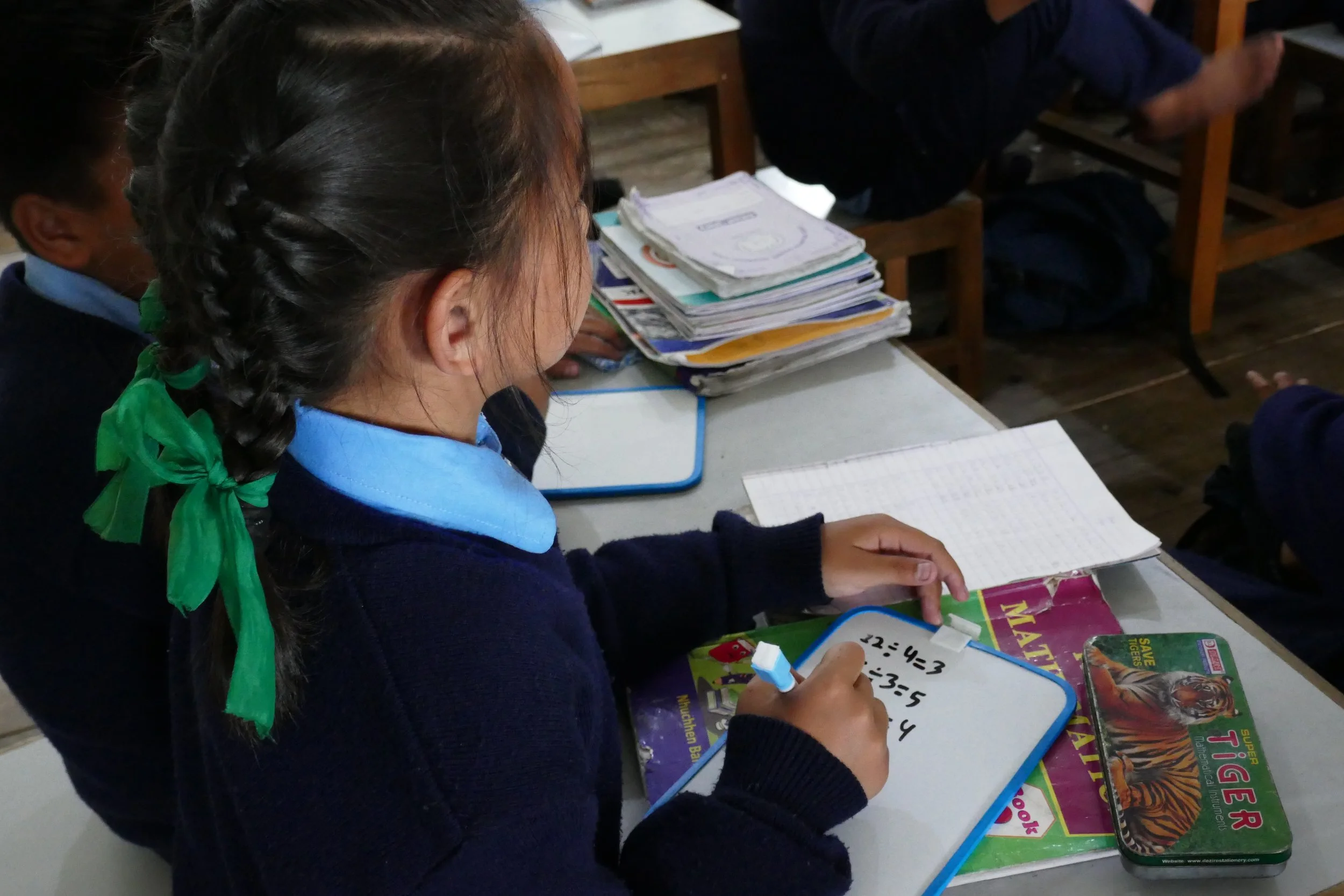
Education in Nepal
Nepal has made significant strides in education over recent decades. From a nation where access to schools was once limited primarily to urban elites, Nepal has expanded educational opportunities to a broader population, even in rural and remote areas. However, challenges remain in terms of quality, equity, and access.
Structure of the Education System
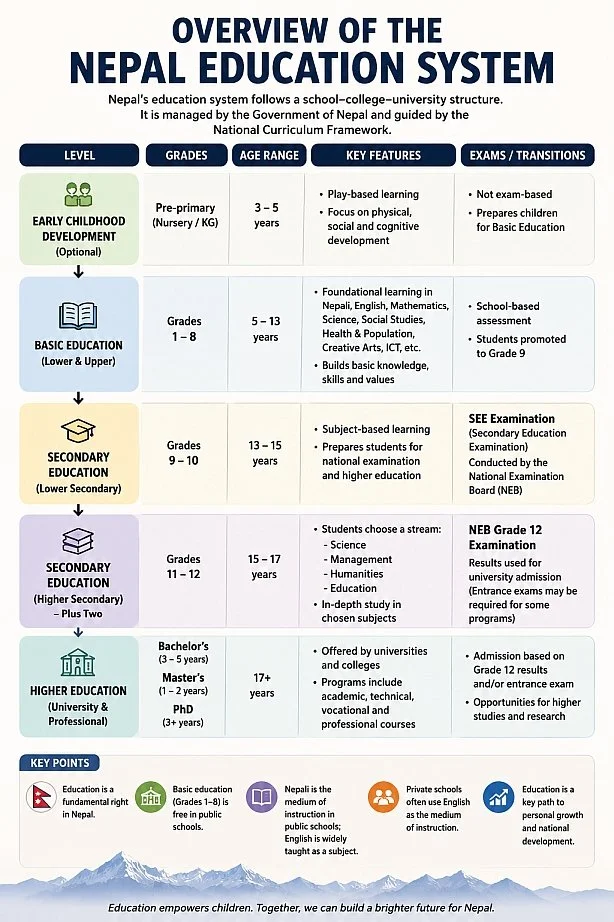
Learn how the Nepal education system works, from primary school through SEE, Plus Two and university. Understand grades, exams and how education is changing lives in Nepal. It is structured as follows:
Pre-primary Education (Ages: 3–5 years)
Nursery, Lower Kindergarten (LKG), Upper Kindergarten (UKG). This is not mandatory, but it helps prepare children for primary school.
Basic Education (Grades 1–8)
Basic education is free and compulsory in principle, though implementation varies, especially in rural regions. The school year is from mid-April to mid-March.
Secondary Education (Grades 9–12)
Grades 9–10: Secondary Level
The school year is from mid-April to mid-March.
After Grade 10, students wanting to continue their educations must take the Secondary Education Examination (SEE). Students have to pass the test in order to advance in their education. Students not interested in University may go directly to technical and vocational education.
Grades 11–12: Higher Secondary, also known as "Plus Two" , “+2”, or "college"
This stage is crucial, as students choose academic majors or streams that shape their future education and career paths.
Choosing a major at the +2 level is one of the most important academic decisions in a student’s life. While the Science stream often receives the most attention, Management, Humanities, and Education offer diverse and equally rewarding paths. The right choice depends not just on academic grades but on personal interests, future goals, and long-term planning.
The school year is from May/June to March/April
Tertiary Education
Includes universities, colleges, and technical institutions.
Nepal has several public universities, the largest being Tribhuvan University, along with newer institutions like Kathmandu University, Pokhara University, and Purbanchal University.
Degree levels include Bachelor’s, Master’s, and PhD.
Technical and Vocational Education
Nepal has a growing network of technical and vocational education and training (TVET) institutions that provide practical skills in fields such as agriculture, health, hospitality, and engineering. These programs are vital for youth who do not pursue university education. The school year is generally late August/ early September end mid-June/July
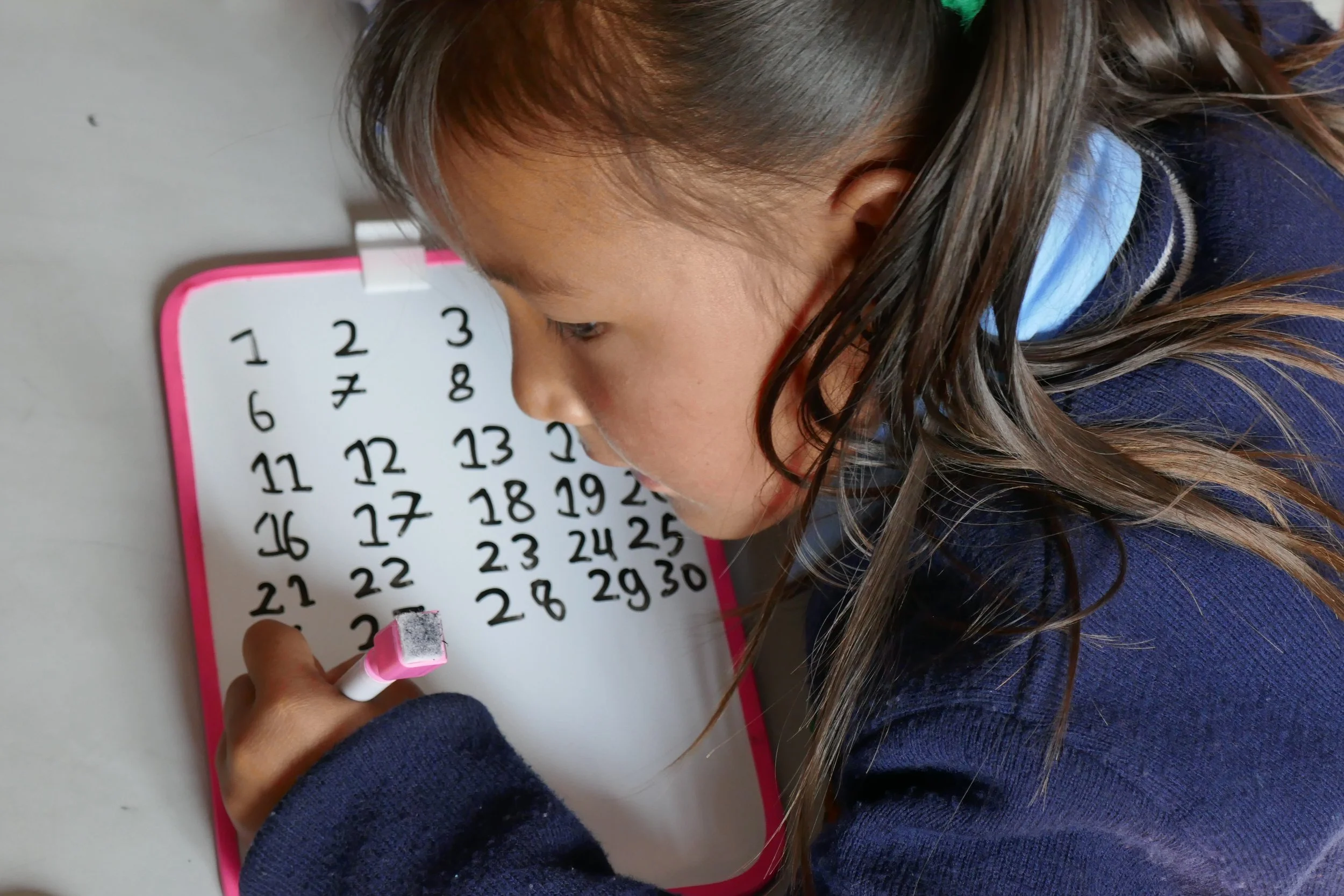
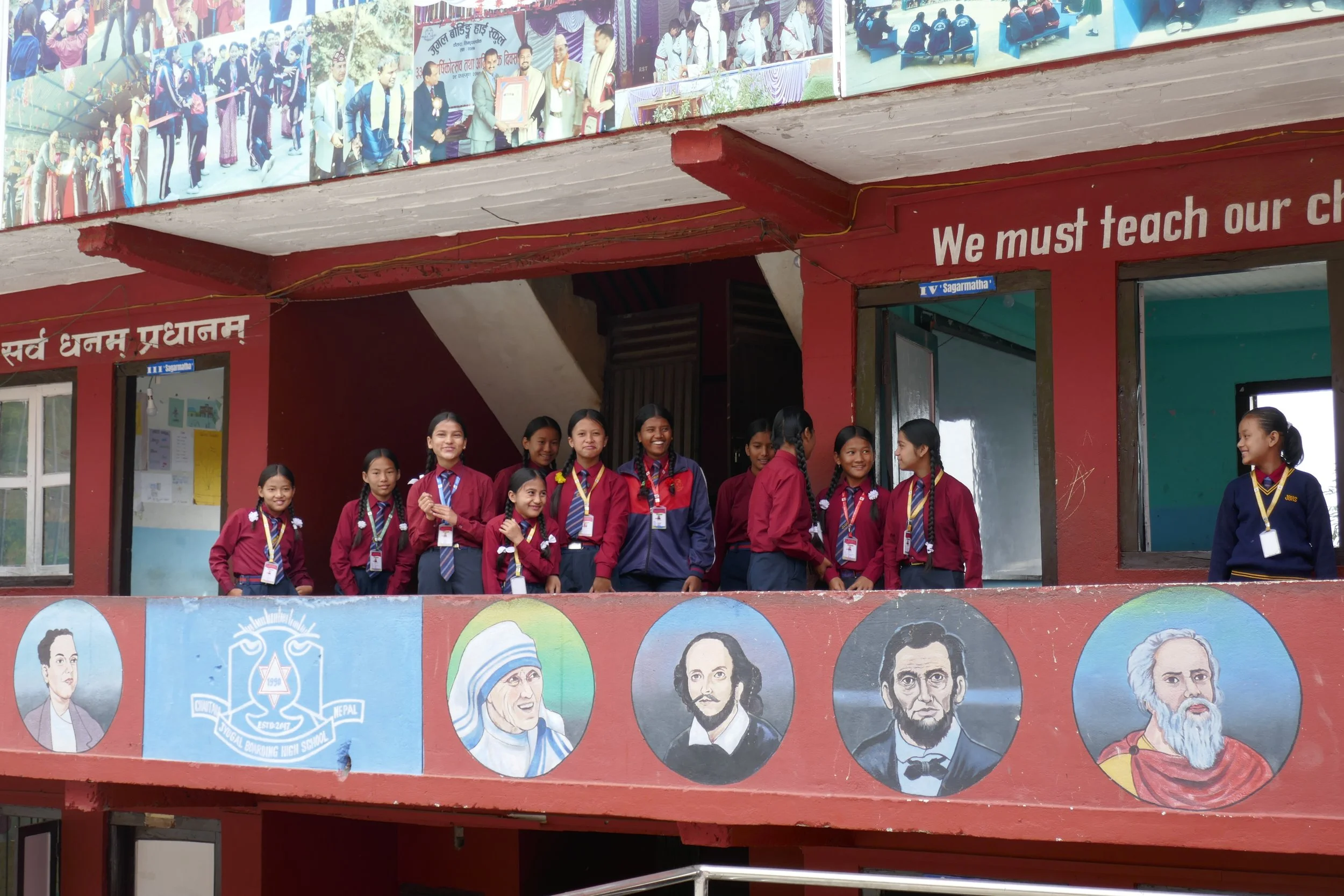
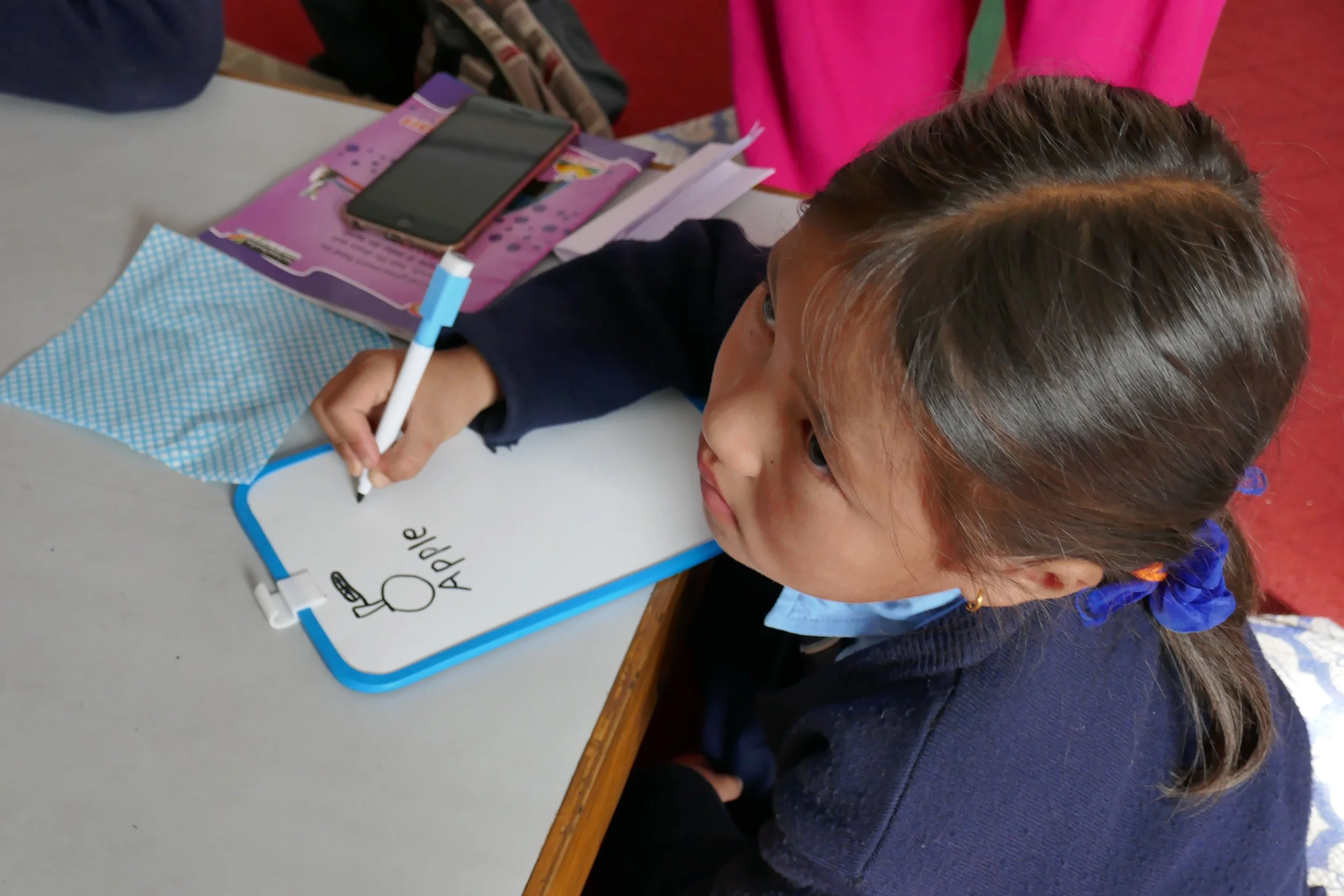
Educational Challenges In Nepal
Despite progress, Nepal’s education system faces significant challenges: Access in remote areas: In mountainous and rural regions, students may have to walk hours to reach the nearest school.
Quality of education: Public schools often suffer from a lack of trained teachers, poor infrastructure, and limited teaching materials.
Gender and caste disparities: While gender parity has improved, girls in some areas still face barriers. Marginalized castes and ethnic groups often have lower educational attainment.
Economic barriers: Although education is nominally free in public schools, hidden costs (uniforms, books, exam fees) can be burdensome for poor families.
Frequently Asked Questions About the Nepal Education System
What grades are included in basic education in Nepal?
Basic education in Nepal consists of Grades 1 through 8. Students typically begin Grade 1 at around age five and study a broad curriculum that includes Nepali, English, mathematics, science, and social studies.
What is secondary education in Nepal?
Secondary education in Nepal consists of Grades 9 through 12 and is divided into two stages. Students first complete Grades 9 and 10, culminating in the Secondary Education Examination (SEE), an important national exam. Those who continue their studies enroll in Plus Two (Grades 11 and 12), where they specialize in subjects such as Science, Management, Humanities, or Education. Completing secondary education prepares students for university, technical training, or professional careers.
What is the SEE examination?
The Secondary Education Examination (SEE) is taken at the end of Grade 10. It marks the completion of secondary school and helps determine a student's options for continuing into Plus Two or technical education.
What is Plus Two in Nepal?
Plus Two refers to Grades 11 and 12 and is similar to the final two years of high school in many countries. Students usually choose a specialization such as Science, Management, Humanities, or Education.
What is the National Examination Board (NEB) examination?
The National Examination Board (NEB) oversees Nepal's Grade 11 and Grade 12 examinations. The Grade 12 board exams are a key milestone for students completing Plus Two and play an important role in university admission. While most universities consider NEB results during the admissions process, some programs also require applicants to pass additional entrance examinations.
What languages are used in schools in Nepal?
Schools in Nepal typically teach in Nepali or English, depending on the type of school. Most government (public) schools use Nepali as the primary language of instruction, while many private schools teach most subjects in English. Students generally study both Nepali and English, and in some regions, local languages are also used in the early grades to help children begin their education in their native language. Tsering’s Fund most of our students to English Medium Boarding Schools.
Why do many students need sponsorship?
Many rural families rely on subsistence farming and have very limited income. Sponsorship helps cover tuition, uniforms, books, transportation, and sometimes boarding, allowing students to remain in school. Learn more about our Student Sponsorship Program
How can I sponsor a child in Nepal?
Tsering's Fund makes it easy to sponsor a student in Nepal. Your sponsorship helps provide access to education by covering expenses such as tuition, school supplies, uniforms, and, for some students, boarding and meals. Sponsors receive information about the student they support and periodic updates on their educational progress. Every sponsorship gives a deserving child the opportunity to stay in school and work toward a brighter future.
See our students that need sponsors or make a general Donation.